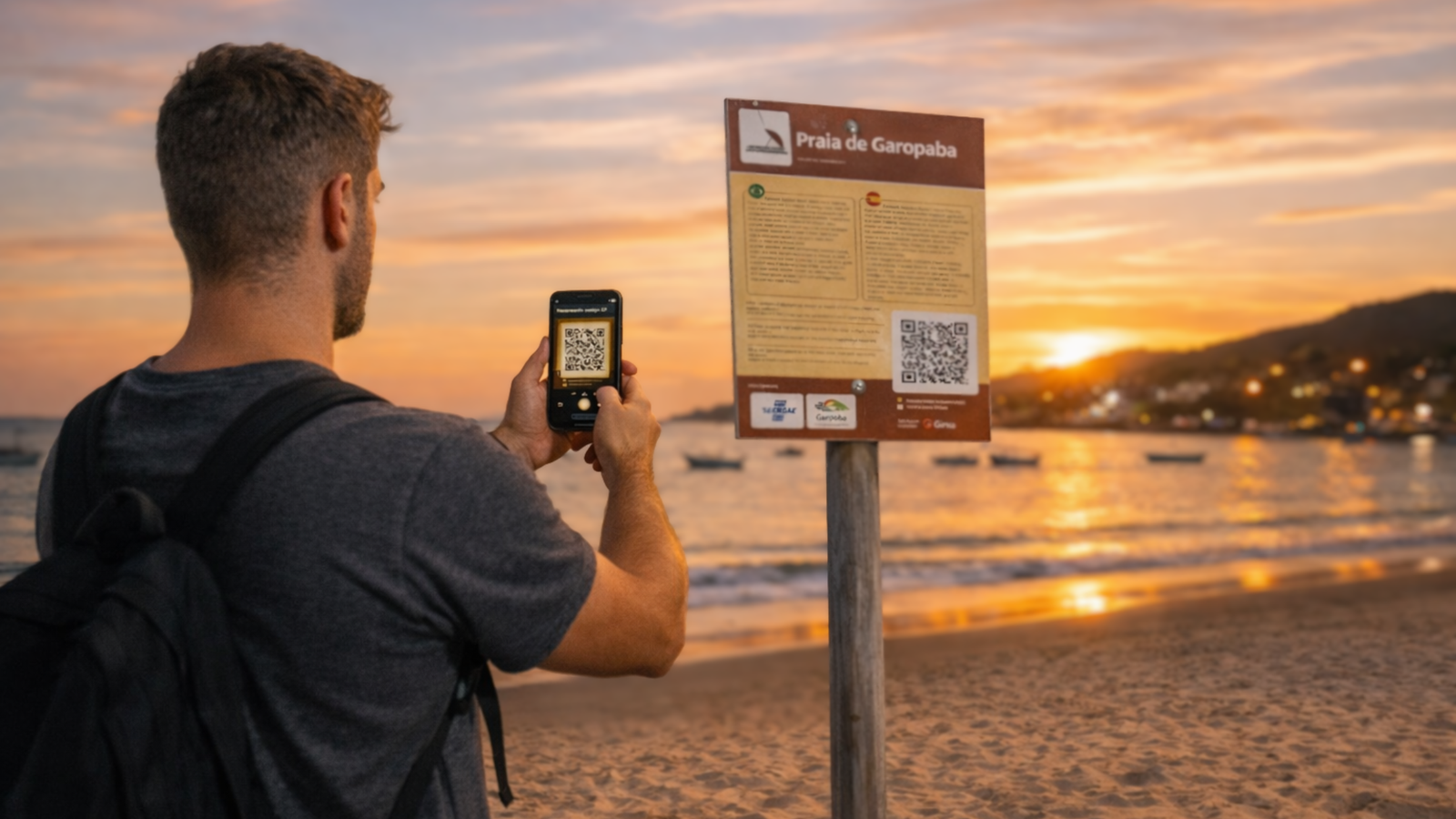
Whale watching in Garopaba
There's something that we, the residents of Garopaba, never tire of repeating to newcomers: if you're here between July and November, look at the sea carefully. Because at some point during your day—having coffee on the veranda, walking on the beach—a spray might appear on the horizon, followed by a dark, enormous body breaking the surface. That's the... whale watching in Garopaba, Yes, it really happens, for free, right from the sand.
And it's no small thing. We're talking about an animal that leaves Antarctica, crosses thousands of kilometers of open ocean, and chooses precisely this little stretch of coastline in Santa Catarina—ours—to give birth, nurse, and teach its offspring to swim. From all over the planet, they come here. And today we're going to explain why, what this thing called a... Right Whale Route, How does whale watching work in Garopaba without stressing the animals, and how long is it possible to see this spectacle?.
Why is our coastline so special to them?
It's not luck, it's geography. The southern coast of Santa Catarina — and Garopaba is right in the middle of it — has a rare combination: protected bays, shallow and warm waters (compared to Antarctica, of course), and an absence of large marine predators nearby. This creates an almost perfect nursery.
Pregnant females arrive here already weighing tens of tons, ready to give birth. The pups are born with very little body fat and would not survive the extreme cold of the polar waters. That's why the mothers migrate: they seek a calmer and warmer sea so that the newborns can gain weight, learn to swim, and develop the layer of fat that will protect them on their return south. It's basically an open-air neonatal ICU, and our coast was chosen by nature for this.
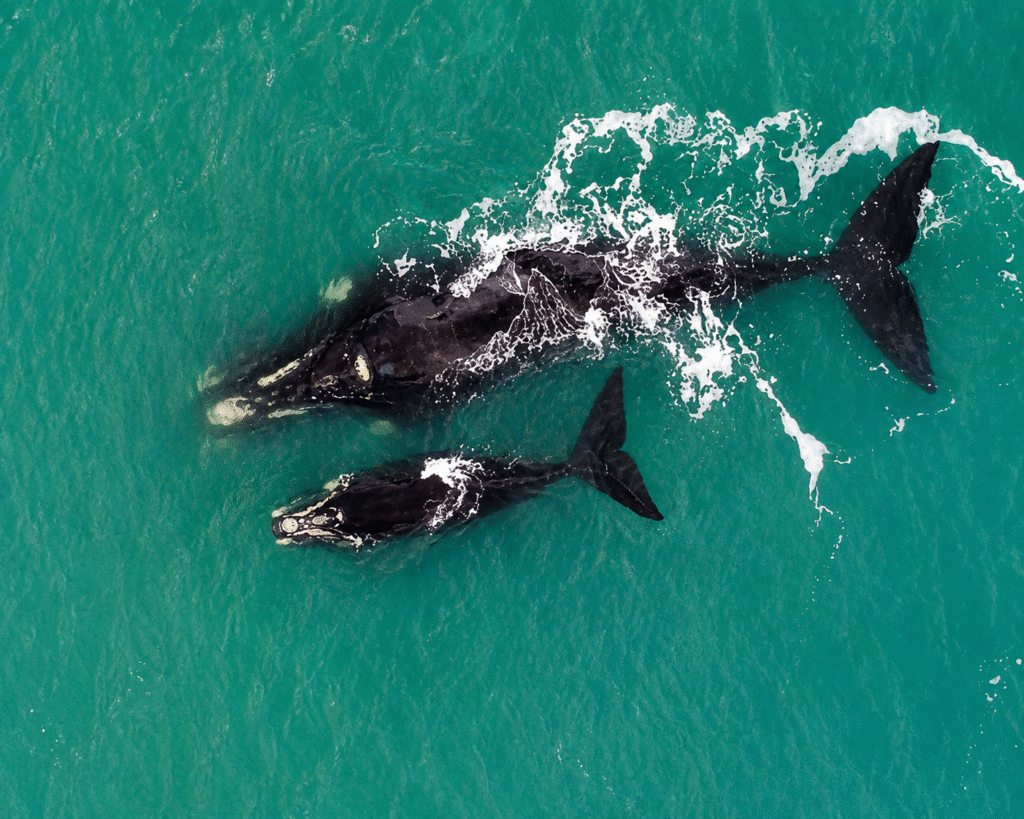
And there's another detail we love to tell visitors about: the bays in our region, like the one at Siriú and the protected stretches near the Gamboa It's from Silveira, They offer precisely the kind of calm, shallow water that facilitates safe coexistence between mother and calf in the first weeks of life. It is no coincidence that the southern coast of Santa Catarina is internationally recognized as one of the main breeding grounds for the southern right whale in the world.
Who are these giant visitors?
The protagonist of our season is... southern right whale (Eubalaena australisThe whale has a curious history behind its name. In the past, whalers called it "franca" (right whale) precisely because it was the easiest prey to hunt: docile, coastal, it floated after death and yielded a lot of oil and baleen. It was almost extinct because of this—the last whaling station in Brazil, in fact, operated right next door, in Imbituba, until 1973. Today, what was once a hunting target has become a symbol of conservation and species recovery.
They are enormous: they can reach 16 or 17 meters in length and weigh more than 50 tons. They have no dorsal fin, which helps to differentiate them from other whales, and their head occupies almost a quarter of their body, with a very curved mouth full of baleen plates instead of teeth. Even being gigantic, they are surprisingly docile and curious — characteristics that, incidentally, also facilitate safe observation from the coast.
Their reproductive cycle is long: generally, an adult female takes about three years between litters, including the twelve months of gestation and the intense period of breastfeeding and caring for the offspring before she can rest and recover energy to become pregnant again. This explains why protecting the species during the season is taken so seriously: each surviving offspring represents years of biological investment by the mother.
What is the Southern Right Whale Route (and why is Garopaba part of it)?
Here's something many outsiders don't know: Garopaba doesn't observe whales alone. We're part of a larger, officially recognized territory called... Southern Right Whale Environmental Protection Area (APA), Created by federal decree in 2000 and administered by ICMBio (Chico Mendes Institute for Biodiversity Conservation), this conservation unit extends over approximately 156,000 hectares and 130 km of coastline, covering 9 municipalities on the southern coast of Santa Catarina, with a special focus on the stretches between Paulo Lopes and Imbituba — where historically the largest number of whales are concentrated.
Based on this environmental foundation, the Right Whale Route, a tourist route that connects Garopaba, Imbituba and Laguna All in one experience: nature, Azorean culture, seafood-based cuisine and, of course, whale watching as the guiding thread. Garopaba joins this route with the simplicity of its fishing villages and beaches such as Gamboa,Rosa, Silveira It is Siriú; Imbituba complements the itinerary with the Whale Museum — located in the old whaling station —, the Visitor Center of the Southern Right Whale Project, on Itapirubá Norte Beach, and whale watching at Praia do Rosa, Praia da Ribanceira, and Praia de Itapirubá; and Laguna completes the route with its historic center listed by IPHAN (National Institute of Historic and Artistic Heritage) and more than 600 preserved buildings.
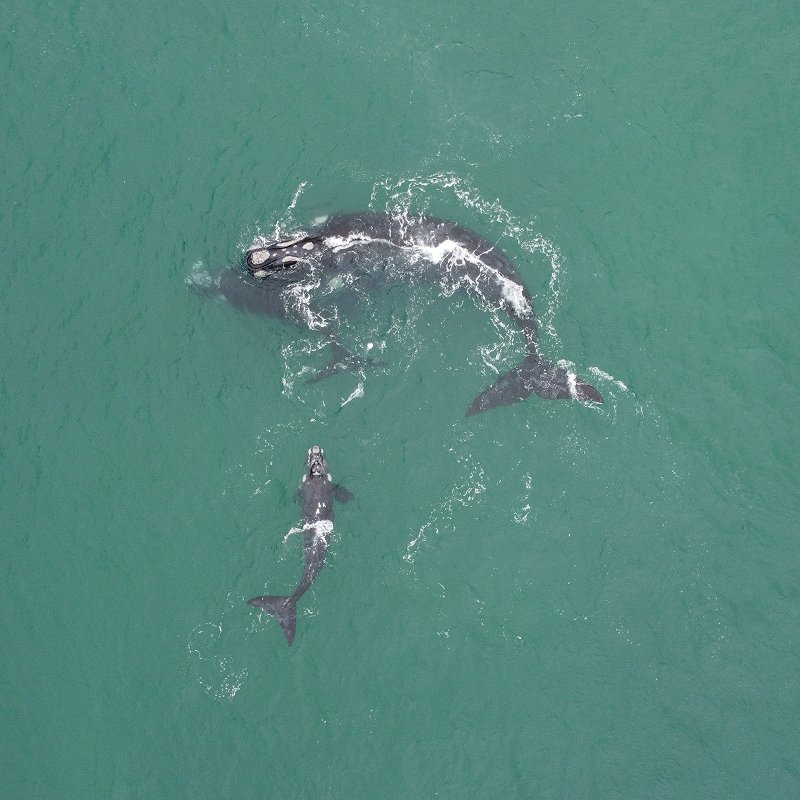
The idea behind the route isn't just "to see whales and that's it." It's to invite you to hike along coastal trails that end at breathtaking views, sit in a fresh fish restaurant, explore a local market, and return home understanding why this stretch of coastline is so special—not just for the whales, but for everything that revolves around them.
Why this matters to visitors — and to those who live here
For people who make a living from tourism in the region, whale season is not just a beautiful spectacle; it's an engine of the economy. It boosts lodging, restaurants, local commerce, and ecotourism as a whole, attracting visitors from various states—and even from outside Brazil—precisely during the winter months and the beginning of spring, a period that is historically quieter for beach tourism. In other words, the whales help spread tourism throughout the year, and that's great for those who work here.
But there's another side to it, perhaps even more important: their presence is a sign that our coast is being well cared for. The southern right whale is still an endangered species, and the fact that it continues to choose this coastline, year after year, with increasing sighting numbers, shows that conservation efforts are working. Each whale that appears before us is the result of decades of environmental protection, monitoring, and community education. For those who live in Garopaba, this also becomes a matter of identity: we grow up hearing about them, waiting for the season to arrive, telling our children and grandchildren about this phenomenon that only happens here.
Where to see whales in Garopaba
Here's the practical part, which is what every visitor wants to know. The good news is that in Garopaba you can go whale watching without leaving the shore — and sometimes it's even better that way, because you can stay as long as you want without any rush.
Whale Lookout, on Gamboa Beach This is the city's most well-known spot for this purpose. Access is via a short, easy trail on the right side of the beach, and at the end you are rewarded with one of the most beautiful views of Garopaba. Between July and November, the viewpoint becomes one of the best spots in the region to observe southern right whales resting, mating, or caring for their calves near the coast. Interestingly, between May and July, the same viewpoint also serves as an observation point for mullet fishing—another tradition that is very much alive here.
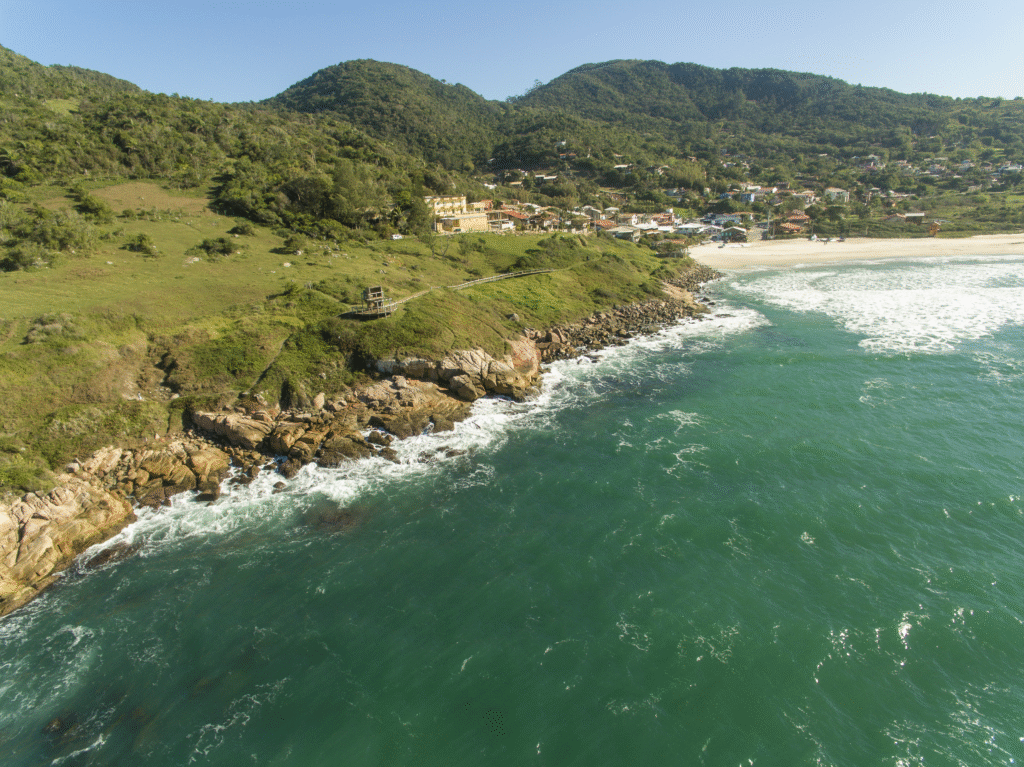
Silveira Beach — Besides being one of the best-known surf spots in Brazil, Silveira is located within the Southern Right Whale Environmental Protection Area. During the winter, it's common to spot whales there, especially in the morning when the sea is usually calmer.
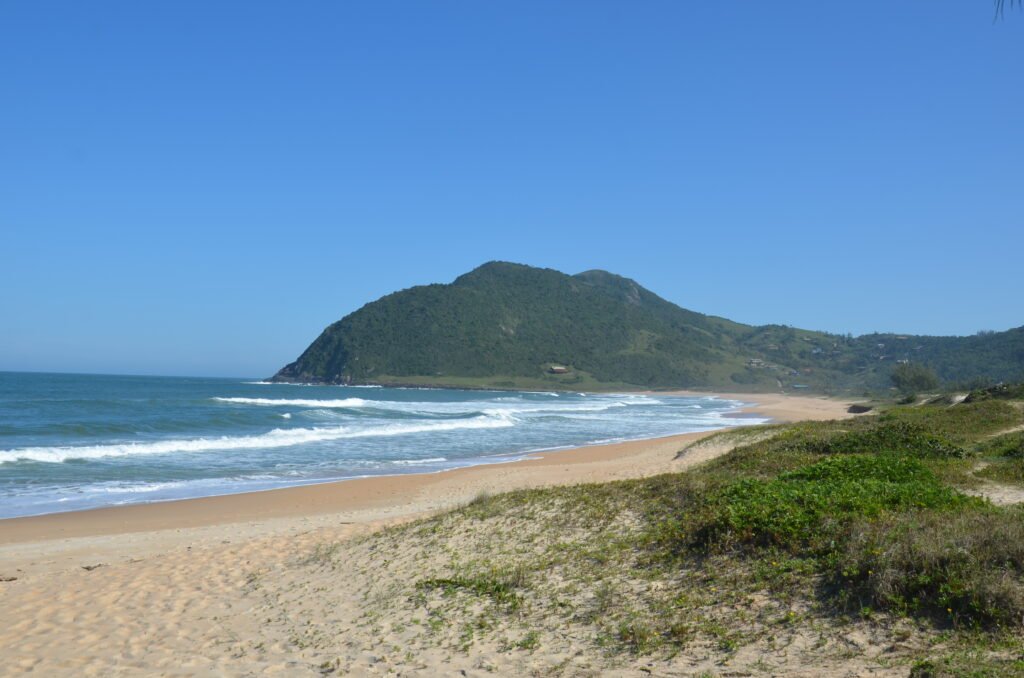
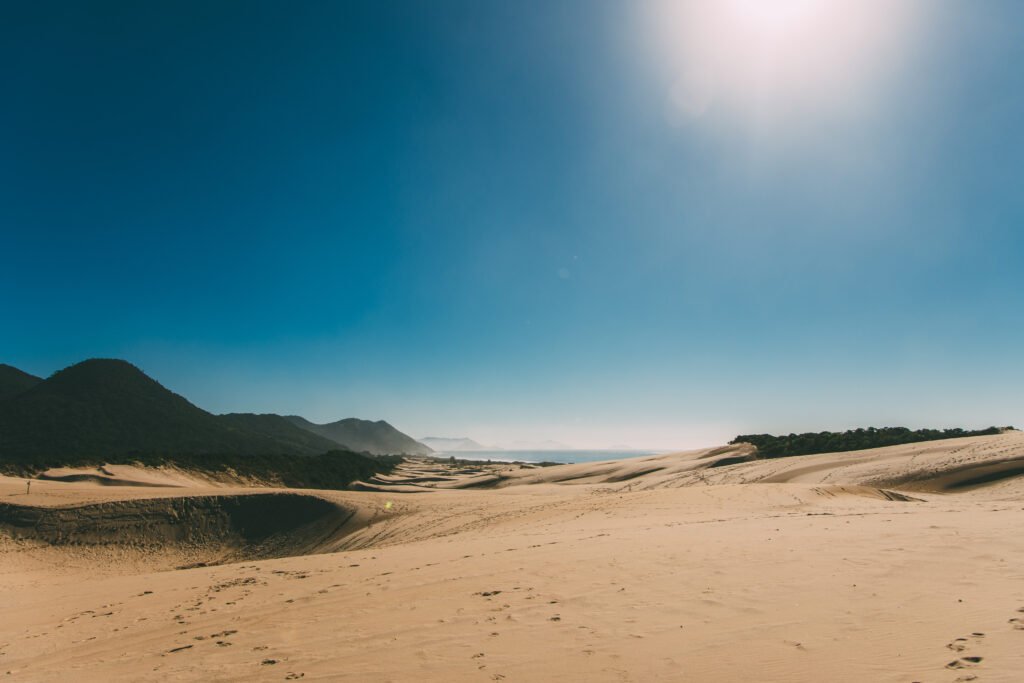
Siriú Dunes Climbing the dunes is worthwhile just for the panoramic view of the beach, but between July and November there's the added bonus of spotting whales swimming close to the shore below, in addition to the classic sunset view.
Siriú Bay The calmer, more sheltered waters of this region create a tranquil environment, ideal for mothers and their offspring to rest before continuing their journey.
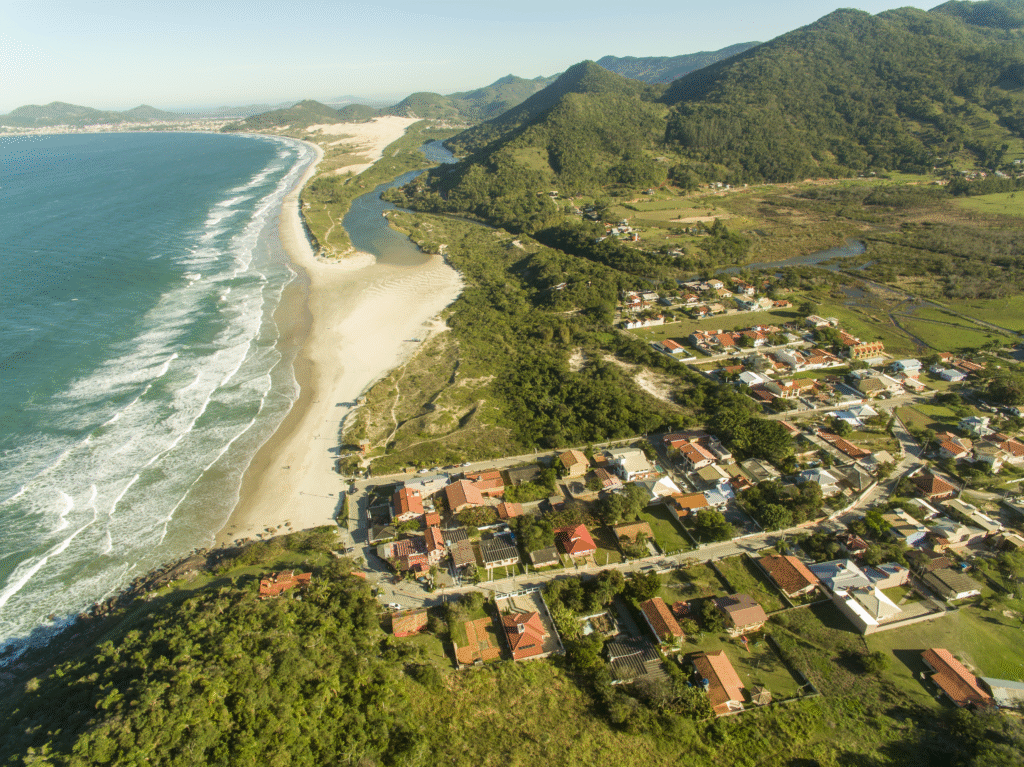
Generally speaking, any viewpoint, rocky shore, or dune with a good view of the open sea can become an observation point during peak season. Our friendly advice: go in the morning when the sea tends to be calmer, bring binoculars if you have them, choose a spot with good visibility, and be patient—whale watching is a bit like fishing; the waiting is part of the experience, and the reward is enormous.
Do you want to go accompanied by someone who understands the subject?
Let's be honest: spotting a whisper in the distance from a lookout point is one thing, but walking the right trail at the right time, alongside someone who knows how to read the sea—someone who recognizes the behavior of a mother protecting her calf, who knows where whales usually "show up" that day, and who transforms every detail into a story you'll take home. If you want to elevate your whale watching experience in Garopaba, here's the local team that does it expertly—always on land, always respecting the animals:
- Cetacean Project Imagine a team passionate about whales: biologists and tourism experts guiding you through strategic sighting points, explaining behavior, biology, and conservation in real time. It's observation with a scientific basis and genuine emotion. FIND OUT MORE HERE!
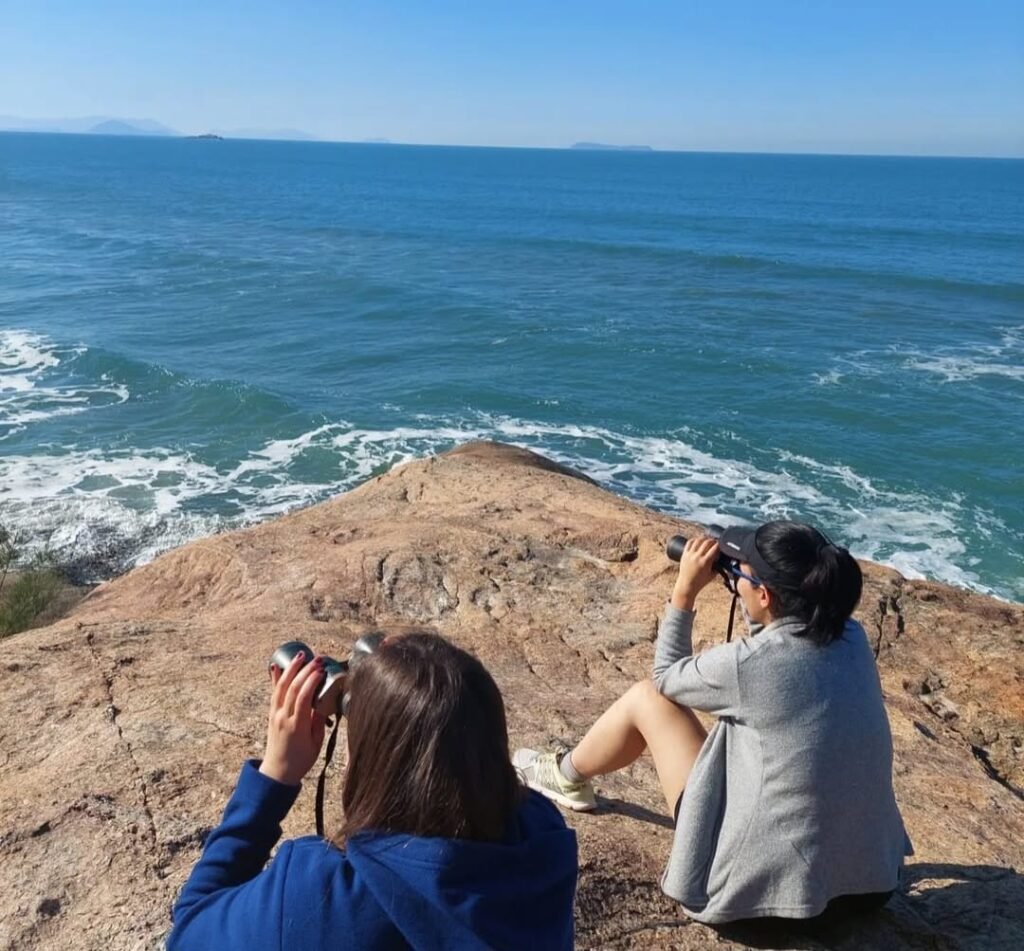
- Southern Right Whale Expedition, with Amo Garopaba — a breathtaking itinerary passing through the city's beaches with the highest whale watching history, with an extended 6-hour option that also includes a traditional seaside lunch and a stop at the Southern Right Whale Museum. Ideal for those who want to transform the morning (or the whole day) into a complete immersion. FIND OUT MORE HERE!
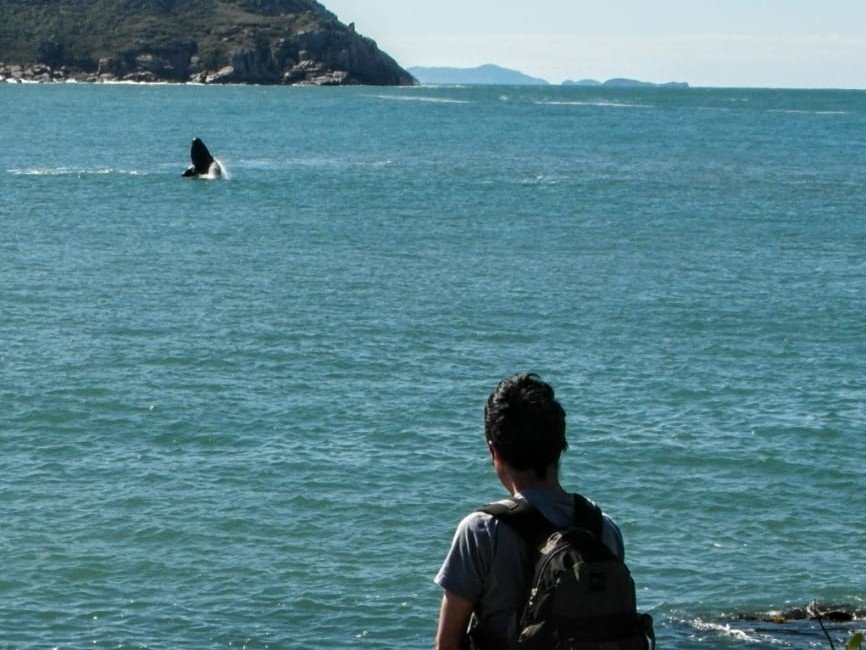
- Whale Trail Paths, with Terra Mãe Ecotourism — For those who truly enjoy hiking: trails ranging from 5 to 15 km, cutting through wild beaches, dunes, and rocky shores, always with guides who were born and raised watching whales pass through these waters. Each stop offers a different natural viewpoint. FIND OUT MORE HERE!
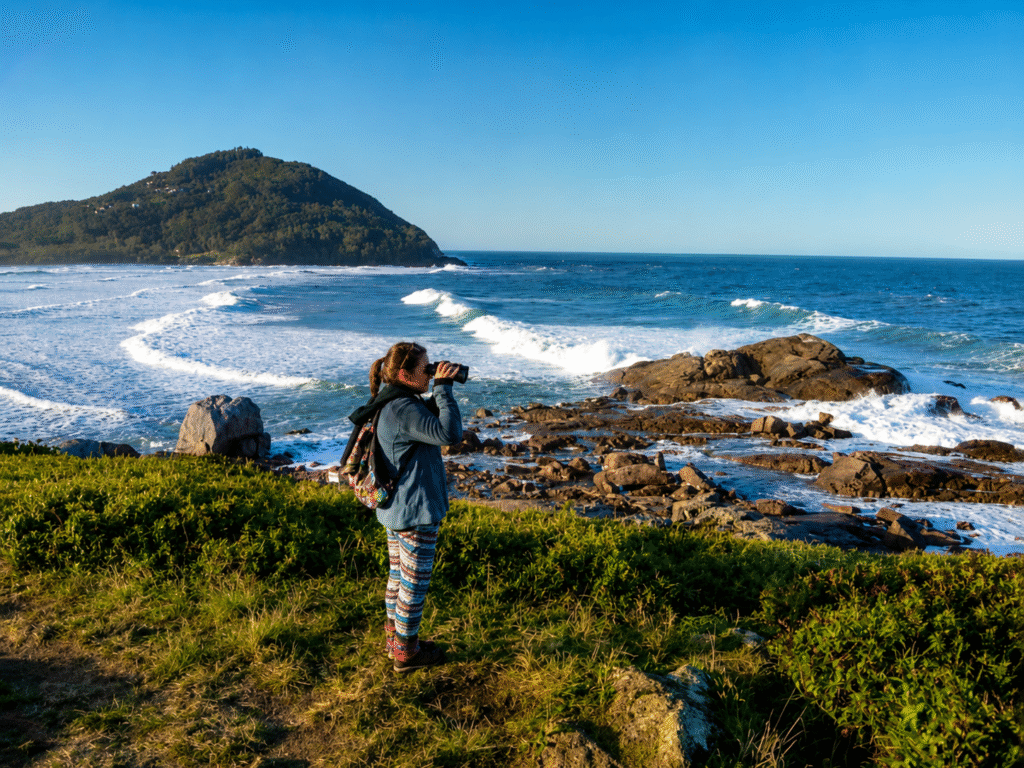
- Trails through the Nurseries, with Amo Garopaba — a gentler walk, lasting up to 3 hours, through the areas that researchers affectionately call the "nurseries" of southern right whales — the calmer corners of the coast where mothers and calves rest. There's an option heading towards Praia do Rosa or passing by the Southern Right Whale Museum, and it works well even for families with children from 6 years old. FIND OUT MORE HERE!
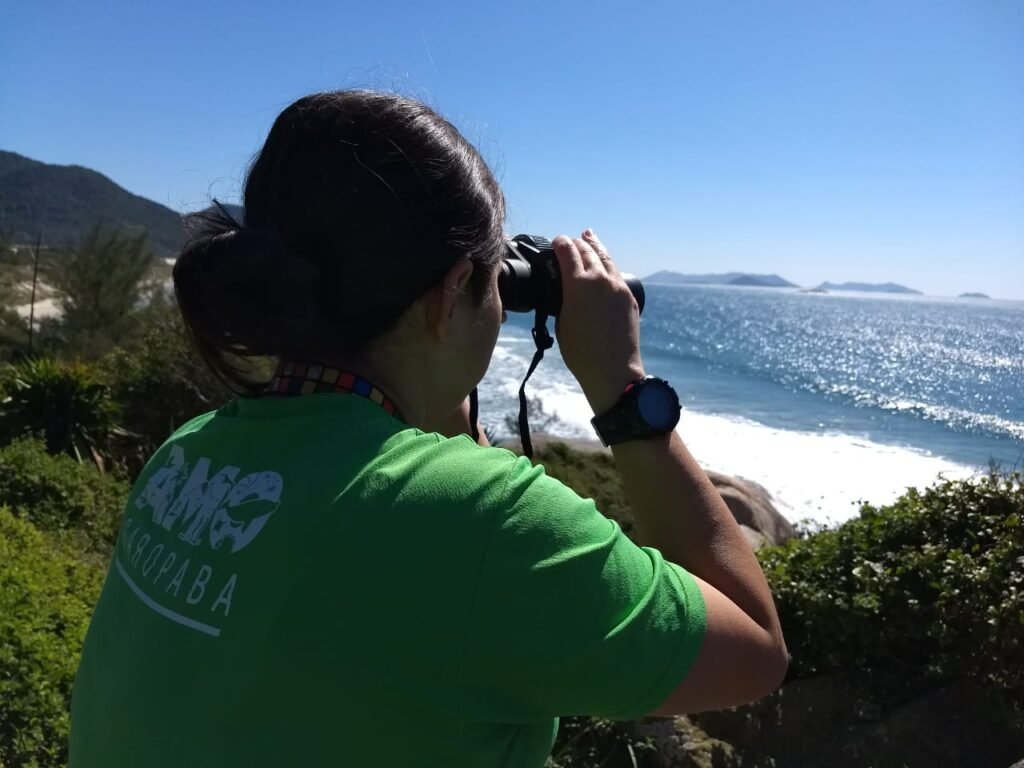
Each guide has their own approach — more scientific, more gastronomic, more adventurous, or more family-oriented — but they all have one thing in common: they transform a simple "I saw a whale" into an unforgettable experience. It's worth contacting each guide via WhatsApp or Instagram to confirm dates and availability, as the tours follow the rhythm of the season.
Observation rules: how to enjoy yourself without disturbing others
This is the point we are most keen to explain thoroughly, because it involves the safety of the animals — and also because it's the law.
In Brazil, any form of intentional harassment of cetaceans is a crime, as stipulated in Federal Law No. 7,643/1987, punishable by two to five years of imprisonment and a fine. Brazilian waters have been officially considered a sanctuary for whales and dolphins since 2008. Furthermore, IBAMA Ordinance No. 117/1996 details specific rules for approaching whales, and the Management Plan of the Southern Right Whale Environmental Protection Area reinforces these guidelines locally.
In practice, what does this mean for someone observing from the beach or a viewpoint?
- Keep your distance. Technical guidelines specify a minimum distance of 100 to 300 meters depending on the activity (swimming, noise, boating), but the general message is simple: never try to approach the animal, whether swimming, kayaking, stand-up paddleboarding, or any other means.
- No low-level drones allowed. Flying aircraft or drones at altitudes of less than 100 meters above animals is prohibited.
- Silence is essential. Avoid shouting and loud noises near the coast when spotting a whale — excessive noise stresses the animals, especially mothers with calves.
- Today, onboard observation is suspended. It's worth reiterating: currently, by decision of the Federal Court, whale watching tourism by boat is prohibited in our region, precisely to guarantee the protection of females and calves. In other words, if someone offers you a "boat trip to see whales" here, be suspicious — the correct, safe and legal way to observe them today is from land, from viewpoints and beaches.
Until when can you see the whales in Garopaba?
The official season runs from July to November, with peak sightings concentrated between August and October, This is especially true when the number of mothers with offspring tends to be higher near the coast. In recent years, the first sightings have been arriving earlier and earlier—in 2026, for example, the first sightings on the coast of Santa Catarina occurred as early as May, a sign that the species' population continues to recover. In any case, if you are planning a trip, the message is: the closer to August and September, the greater the chances of witnessing this spectacle.
A tip for finding whales in real time.
If you want to increase your chances of spotting a whale without relying solely on luck, the Franca Austral Project (ProFRANCA), from the Australis Institute, maintains a Map of sightings updated almost in real time., with records made by the monitoring team and also by residents and tourists who spot whales in the region. Just access baleiafranca.org.br, under the tab “Where are whales found?”, Or use the free ProFRANCA app (available for Android and iOS), which brings the same interactive map directly to your phone. Before heading to the viewpoint, take a look at it—it's a great way to plan your schedule and choose the right spot for the day.
Come and see for yourself!
Ultimately, whale watching in Garopaba is one of those rare moments when nature chooses to reveal itself to those who have the patience to look. You don't need to book a tour, you don't need to pay an entrance fee, you don't even need to stray far from the beach—just walk to the Gamboa viewpoint, sit on a dune at Siriú, or simply pay attention to the horizon while at Silveira. At some point, between July and November, the sea will give you a sign: a breath, a leap, a tail slapping against the water. And then you will understand, with your own eyes, why this stretch of the Santa Catarina coast was chosen—year after year, generation after generation—as the temporary home of the largest mammal in the South Atlantic.