Let us tell you a secret that every resident of Garopaba carries with pride: the most beautiful festival in Garopaba doesn't happen in the summer.
It's not during the peak of January, when the beaches are packed and the restaurant line stretches around the block. It's not during Carnival, nor whale season. The most genuine celebration, the one that truly makes the locals' eyes sparkle, happens on a June holiday, when the air has cooled, autumn has set its tone, and the city has regained its former charm.
We are talking about 26th Garopaba Fair, which happens to June 3-7, 2026, at Governor Ivo Silveira Square. Five days that bring together what the city has that is most authentic: faith, good food, music, tradition, solidarity, and that human warmth that no crowded beach can replicate.
If you've heard of it but never been, it's time to change that. And if you've never heard of it, you're about to discover the best reason to visit Garopaba in the fall.
Where Did This Party Come From (and Why Has It Survived 26 Years)
To understand the Quermesse, you need to understand where Garopaba comes from.
The city has deep Azorean roots. The first settlers arrived from Portugal and the Azores islands between the 18th and 19th centuries, bringing with them not only the techniques of artisanal fishing and the architecture of the Church of São Joaquim, but also a way of living in community. Of celebrating together. Of caring for one another.
The word "quermesse" itself tells this story. It comes from Flamengo. kerkmesse — kerk it means "church" and harvest It means "fair." That is, literally: a church fair. The tradition arrived in Brazil with Europeans during the colonial period and mixed with indigenous, Afro-Brazilian, and immigrant cultures, acquiring a multicultural character that is exactly the spirit of... Garopaba Church Fair.
Our local edition was born in 1999 — 26 years ago — as a grassroots initiative to celebrate and preserve local culture, uniting music, art, faith, and solidarity in the same space. It started small, as a community celebration. And it grew because it touched on something real: the desire of a community to recognize itself, to celebrate itself, to say, "this is ours and we take care of it.".
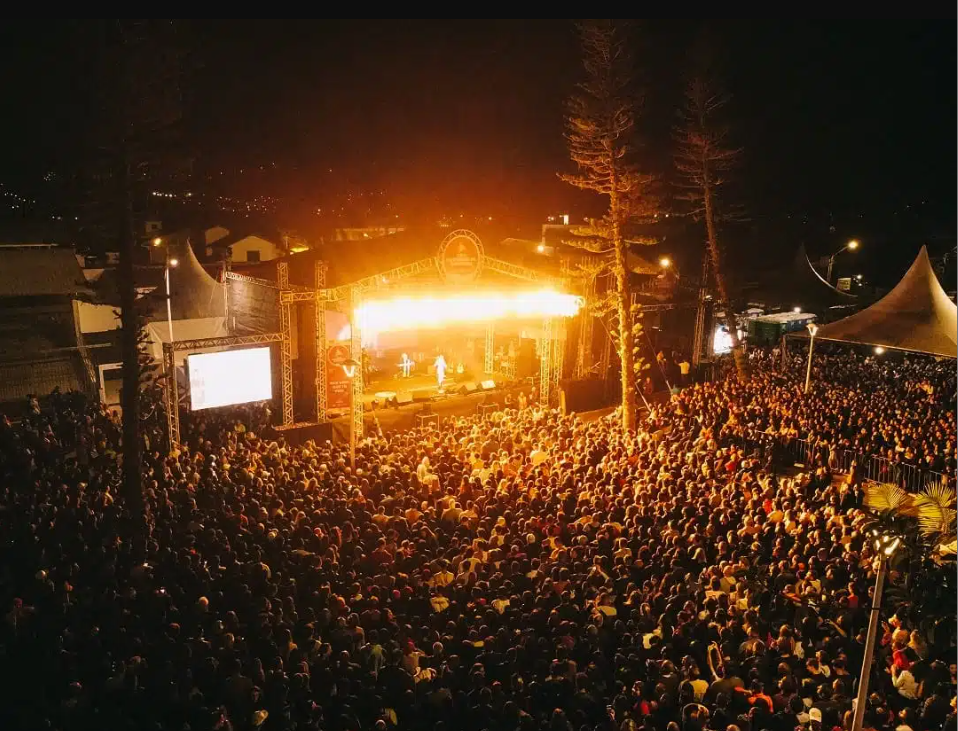
Today, with 26 editions under its belt, the Quermesse has already welcomed more than 50,000 people in a single event. It has been the stage for national artists such as Armandinho, Barões da Pisadinha, Jota Quest, and Diogo Nogueira. And this year it will shine with Alexandre Pires, Roupa Nova, Atitude 67, and Mariana Fagundes. But even with all this growth, it hasn't lost its soul. And that, between us, is the most difficult feat of any popular festival.
What Makes the Quermesse a Festival Unlike Anything You've Ever Been To?
You know those parties that seem made just for photos? Quermesse is the opposite of that.
It's meant to be experienced. And what it offers goes far beyond shows — although the shows are very good, as we'll show you.
Mullet. Every day at noon, the square transforms into a communal lunch featuring fresh mullet. Fish from our coast, prepared by the women's network fighting cancer that raises funds for the cause – served at long tables where you sit next to strangers and leave with a new friend. This isn't a tourist restaurant menu. It's neighborhood cooking.
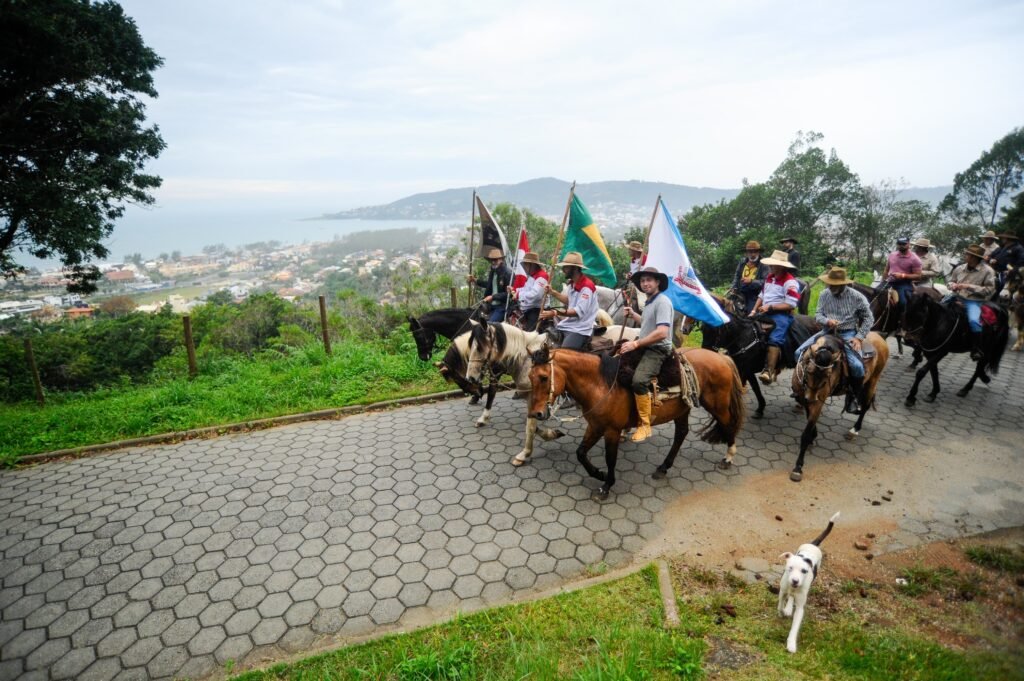
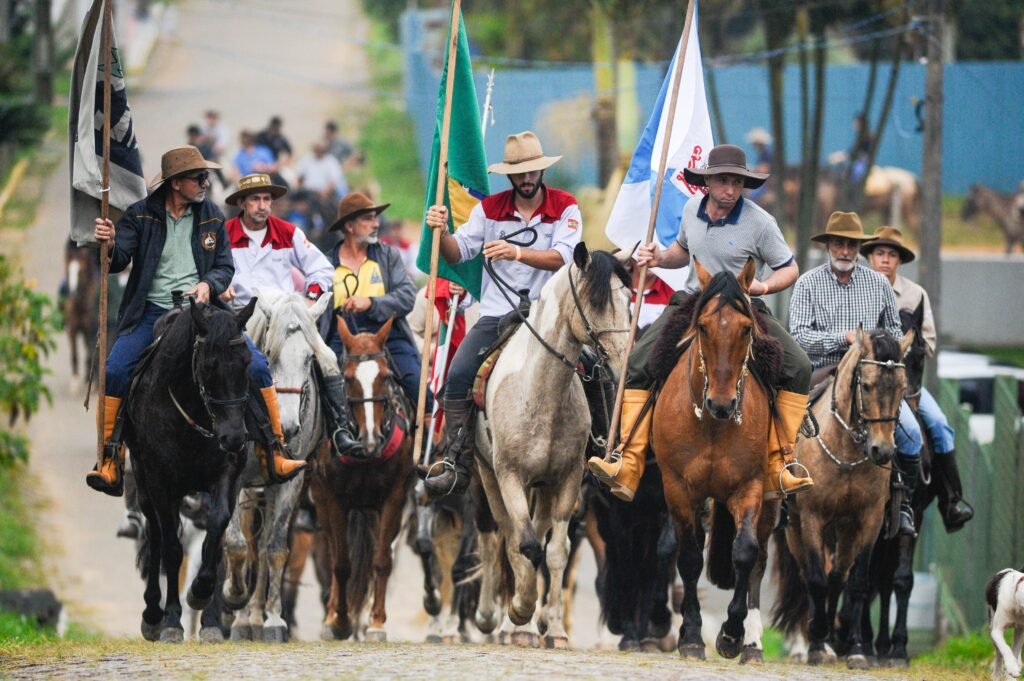
The ox cart and the horseback ride. On Sunday, one of the most impressive moments of the festival takes place: the oxcart parade... Capybara Lagoon, with a pole bending competition. And on Thursday, Corpus Christi, riders travel along beaches and roads in a cavalcade that blends devotion and rural tradition.
The Corpus Christi carpets. On Thursday mornings, residents wake up early to decorate the streets with colorful carpets that will serve as a path for the procession. It's volunteer work, it's collective art, it's devotion in its most beautiful form. Those who see it for the first time are left speechless and speechless.
The entities. One of the things we are most proud of about this festival is that it doesn't exist to enrich anyone. The food stalls, the activities, the spaces—everything is organized by associations, community groups, and entities that provide services to the municipality. APAE (Association of Parents and Friends of Exceptional Children), youth groups, the Pastoral da Saúde (Health Ministry), among others. The festival raises funds for those who take care of the city.
Local artists. The "Talents of the Land" space is one of the cornerstones of the Quermesse. It's where musicians, cultural groups, and artists from Garopaba—often just starting their careers—take to the stage. It's the city investing in its own. And seeing a local artist moved by the applause of their hometown audience? Priceless.
The crafts. The fair brings together dozens of exhibitors with handmade pieces, many of them inspired by Garopaba: the landscape, the southern right whale, fishing, surfing. You take home a real piece of the city.
26th Garopaba Fair, 2026 Program — Five Days Worth the Trip
The 26th edition takes place from June 3rd to 7th, and the program is packed with national attractions and unforgettable cultural moments. We'll tell you what to expect each day.
Wednesday, June 3rd — The opening that sets the tone
The party starts at 6:30 PM with the official opening. Immediately afterwards, there will be shows with Alan Space and Daniel Almaoê, followed by Rock Brothers. In the evening, students from the municipal school system will sing the National Anthem, there will be speeches from authorities, performances by the poet Fatinha and the São Luiz Gonzaga Group — pure tradition. And the night ends with lots of pagode music (Pagode do Ju), DJ Cristiano Sassá, and the big name of the night: Alexandre Pires, who takes the stage at 11:30 PM.

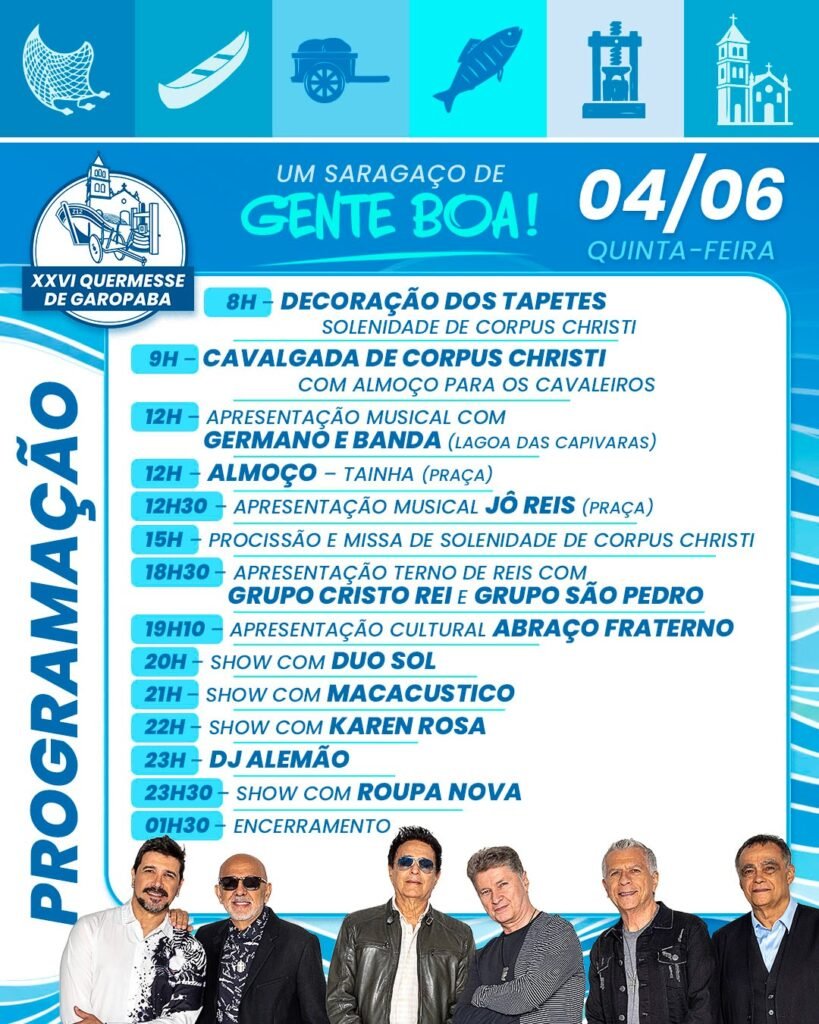
Thursday, June 4th — The most special day of the Quermesse (fair).
This is Corpus Christi Day, and it deserves special attention. The morning begins with the making of carpets on the streets of the city center. At 9 am, the Corpus Christi Cavalcade gathers riders who set off along the roads of the region. At noon, a mullet lunch in the square with a musical performance. At 3 pm, the Corpus Christi Procession and Mass. In the evening, more culture with Terno de Reis and traditional groups, followed by shows by Duo Sol, Macacústico, and Karen Rosa. The evening concludes with... New Clothes At 11:30 PM — one of the most beloved groups in Brazilian music.
Friday, June 5th — Culture from beginning to end
Another mullet lunch at noon. An afternoon filled with cultural performances: the Slow March Clown, the Cara Peta Collective, and the Reboliço Cultural Group. In the evening, shows by Banda Nite, Milsinho and Band, Scincro, and Eduardo Cardoso. The event concludes with... Mariana Fagundes — voice and emotion to spare.

Saturday, June 6th — Diversity Day
In addition to the traditional mullet lunch, Saturday features the Harmonize School of Music, the Talentos da Terra space—that special area for local artists that we always keep an eye on—and shows ranging from Jorge Opala to Zona 12, including Surfistas da Paz and Grupo Apetrechos. And the night ends in just the right way: Attitude 67 On stage from midnight onwards.

Sunday, June 7th — The farewell we never want to end.
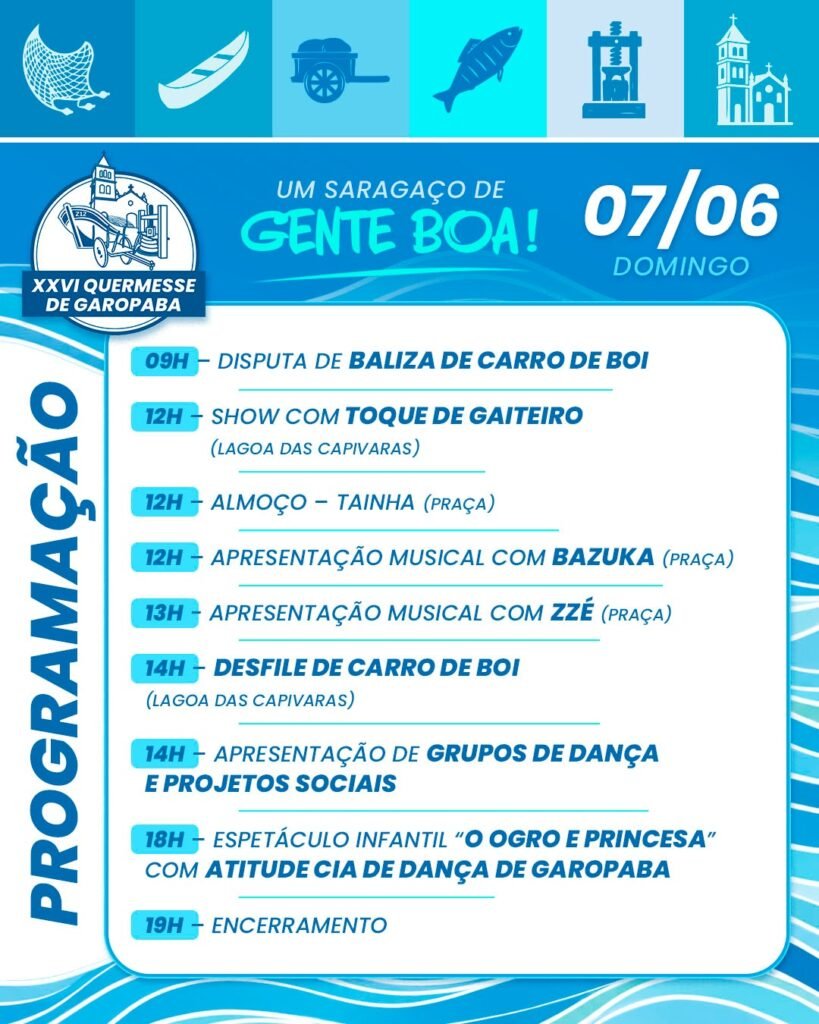
At 9 am, the oxcart driving competition at Capybara Lagoon The community is already warming up. At noon, another round of mullet lunch. In the afternoon, the oxcart parade and performances by dance groups and social projects. At 6 pm, a children's show by Atitude Dance Company from Garopaba. And at 7 pm, the closing ceremony—that moment when every resident of Garopaba looks at the crowded square and feels a strange mix of pride and nostalgia, even though the festival hasn't really ended yet.
What Changes in the 26th Edition (and Why It Matters)
Every festival that is respected evolves. And we are excited about the improvements that the 2026 Quermesse brings.
The organization rethought the positioning of the main stage, the gastronomy area, and the mullet lunch space. The objective is twofold: to improve the audience experience and reduce the negative impact on local businesses, especially regarding street closures. Twenty organizations are responsible for the food, with volunteer work maintaining the collective spirit that has always driven us.
The Talentos da Terra space continues to showcase emerging local artists — because we understand that preserving culture also means opening doors for those who will carry it forward.
The physical structure remains impressive: over 12,000 m² of area, with a significant covered area, main stage, tents, distributed restrooms, and a professional sound and lighting system. For those unfamiliar with it, the structure is surprising—it doesn't look like a small-town festival. It seems exactly the size that Garopaba's culture deserves.
Why is Garopaba in June different from Garopaba in January?
Let's be honest here, from the perspective of those who live and experience this.
Garopaba in the summer is beautiful. But it's a different city. The city becomes fast-paced, full of good people, but fast-paced nonetheless.
Garopaba in June is a revelation.
Autumn has arrived with that pleasant coolness that calls for a light jacket at nightfall, but it's not quite cold yet. The sea takes on that more intense, dense color, the color of the approaching cooler season. The beaches are almost deserted—and beautiful that way. Restaurants have tables to spare, residents are out on the streets, and the city seems to breathe in a different way. That's when you understand why those who come here end up staying. Because Garopaba isn't just about summer. It's a way of life all year round.
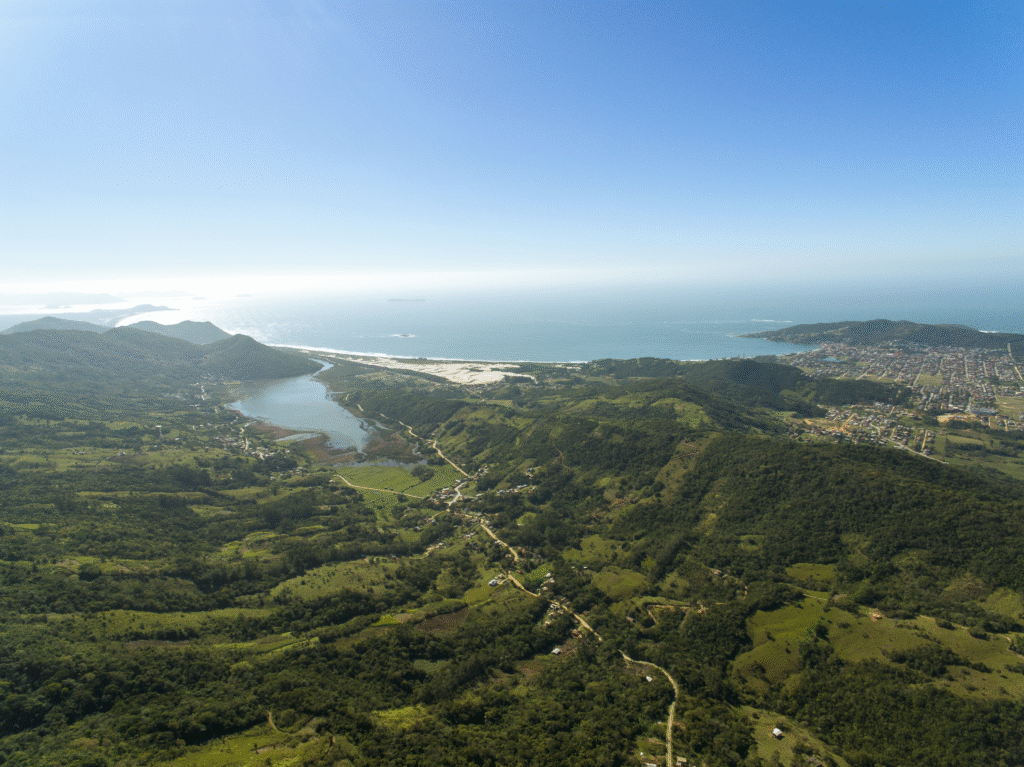
The weather in Garopaba in June has something special about it: days of gentle sunshine, breezy afternoons, and cool nights that call for a light jacket. It's the perfect weather to stay in the square until late, listen to music, eat well, and not want to leave.
And amidst all of this, from June 3rd to 7th, the central square transforms, the lights come on, the smell of mullet fills the air, the music begins — and the city reveals its truest side to those lucky enough to be here.
Tips from Locals: How to Make the Most of Your Life
Since you're thinking of coming (and you will), we're going to give you some tips that only those who know the festival firsthand will understand.
Arrive early for the mullet lunch. It starts at noon and is one of the most enjoyable moments of the festival. The lines form quickly, and rightfully so—the fish is fresh, the atmosphere is truly convivial, and sitting at a table with strangers who become friends is part of the ritual.
Don't skip the horseback riding event and the oxcart parade. We know it sounds like something only people who grew up here would think of, but it's not. It's impressive. Seeing the oxcarts parading around Lagoa das Capivaras with that landscape in the background is one of the most beautiful sights this city has to offer. And the parallel parking competition has a technique you wouldn't imagine.
Arrive early on Thursday to see the carpets. The preparation begins at 8 am. It's well worth waking up early to see the streets being transformed by volunteer hands before the Corpus Christi procession.
Buy handcrafted items. The exhibitors' fair has pieces you won't find in any store. And each one has a story of who made it with their own hands.
Take a stroll through the cultural groups. The Terno de Reis, the Boi de Mamão, the Grupo São Luiz Gonzaga — these performances are short but they are pure gold. They are the living, dancing DNA of Azorean culture.
Dress in layers. The day might get warm, but an autumn night in Garopaba calls for a light jacket. A lightweight jacket in the late afternoon will do the trick, allowing you to enjoy the shows in comfort.
Book your accommodation in advance. The Quermesse attracts visitors from all over Santa Catarina and other states. Garopaba has great options — beachfront inns, chalets, accommodations with ocean views — but the best ones fill up quickly. We have a complete list of where to stay in Garopaba. visitegaropaba.tur.br/onde-ficar.
Take a taxi or come on foot. The city center becomes bustling and the streets around the square have restrictions during the festival.
A Festival That Takes Care of the City While Celebrating
There's a detail about the Quermesse that, the more you think about it, the more beautiful it becomes.
It doesn't exist to generate profit. It exists to generate unity.
The 20 organizations that operate the food stalls use the money they raise to support their projects throughout the year. These include APAE (Association of Parents and Friends of Exceptional Children), youth groups, the Pastoral da Saúde (Health Ministry), and neighborhood associations. The festival feeds those who care for the city.
In previous editions, the Quermesse has gone beyond the borders of Garopaba: one edition became a solidarity event for victims of the floods in Rio Grande do Sul, transforming the entrance fee into an opportunity to donate. That's the spirit of the festival. It never forgets that it's part of something bigger.
We are proud of this. That's why, when the stage lights go out on Sunday night and the square lights return to normal, the feeling isn't one of completion. It's one of a job well done. It's the feeling of a city that looked in the mirror and liked what it saw.
So — are you coming?
There's one argument that no tourist brochure can make better than the experience itself: whoever goes to the Quermesse once, comes back.
It's not a cliché. It really happens. The festival has something that's hard to name—it's that feeling that you're in a place where things truly matter. Where culture isn't decoration, it's life. Where community isn't just a pretty word, it's people hugging each other in the square at two in the morning after a show, with the pleasant chill of autumn on their faces.
Garopaba is already known as the surfing capital of Santa Catarina, as a refuge for southern right whales, and as a destination for paradisiacal beaches and breathtaking trails. But those who came in June and experienced the Quermesse know that this city has a side that goes far beyond the beaches.
It has a heart that beats strongly. And in June, it beats in Governor Ivo Silveira Square.
We're waiting for you.


